Social Policy Issue With Family Prevention and Tobacco Control
Introduction
Tobacco consumption is a major challenge for the 21st century because tobacco-related deaths are increasing, destroying the immature generation and promoting an environmental threat. Globally, tobacco has killed 100 one thousand thousand people in the 20th century, much more than all deaths in Earth Wars I and II combined, and tobacco-related deaths will number around 1 billion in the 21st century if current tobacco utilise patterns proceed (Eriksen et al., 2015). Of the 100 million projected tobacco-related deaths over the next twenty years, well-nigh half volition be of people in the productive ages of 35–69 (Centers for Illness Control and Prevention, 2000). Regardless of many national bans on tobacco sales to minors, approximately 25% of people nether xviii years onetime are using tobacco and 12.6% are using more than two types of tobacco products (Arrazola et al., 2014). There are multiple impacts (economical, wellness, social, family, and peer groups) of tobacco use in youth because they are losing loftier amount of money, every bit the tax on tobacco increases yr by twelvemonth, risk factors for many disease, vulnerability to alcohol use and drugs, and copying his/her tobacco utilise by juniors in schools and sibling in family put them at risk for tobacco use.
There are a variety of programs and policies for tobacco control, but policy analyses on historic period-specific tobacco command are very rare. It is important because the resources, efforts, and approaches to quitting tobacco for people 60 years of age and those 16 years age do not have a similar touch. A study pointed out that there is a need for a comprehensive multifaceted approach to tobacco control policies for youth (Grimsaw and Stanton, 2017; Cancer Council., 2017a). In that location is a demand to observe that as a foundation and productive historic period group, youth should exist a loftier priority considering interventions would be toll-effective and more productive to family unit and the nation. Moreover, approaches to decision-making tobacco in youth are easy in comparison with late adults and the elderly because nicotine addiction in the belatedly stage is hard to overcome. From the point of its effectiveness, preventive and nominal remedial approaches are sufficient for youth. In dissimilarity, more resources and circuitous medical approaches are necessary in late-stage addiction. Likewise, dissimilar kinds of medical risk can be prevented in the early stage (youth) merely are hardly possible in the late phase. Previous studies, enquiry, policies, and programs are not conspicuously distinctly historic period-specific tobacco control approaches, and in our report, we explore the different dynamics of tobacco command policies focusing on youth.
Prevalence of Tobacco Use Amongst Youth
Tobacco utilize amidst youth remains a major public health concern worldwide. Globally, at that place are about one.ii billion smokers, of whom more l% are immature people; the prevalence varies by region, country, and gender (Khuder et al., 2008; Lim et al., 2010; Al-Sadat et al., 2010). By gender, smoking among boys (sixteen%) is almost 3 times than that among girls (six%) globally. In the West Pacific, the prevalence of smoking amid boys (eighteen%) is four times than that among girls (4%), whereas in the Usa and Europe, the gap between boys and girls is less than double. Smokeless tobacco is also gaining popularity and is currently used globally by 8% (6% in boys and two% in girls). The highest proportion of girls using smokeless tobacco (17%) is found in the West Pacific and the lowest (two%) is institute in Europe (World Health Organisation., 2012). Bharat, with 327 one thousand thousand adolescents, has one of the youngest populations in the world; the number of adolescents using tobacco is approximately 21% of the country's population (Vidhubala et al., 2014). Since 1980, big reductions in the estimated prevalence of daily smoking take been observed at the global level for both boys and girls (e.g., in the Usa, about 10% from 1980 to 1990 of twelfth-class students), (Nelson et al., 2008) but considering of population growth, the gross number of smokers has increased significantly (Ng et al., 2014). Co-ordinate to the Global Youth Tobacco Survey (GYTS) 2011, the top iii countries for tobacco consumption rates were Papua New Republic of guinea (43.8%), Chile (31.5%), and Lithuania (30.8%), while Kingdom of cambodia consumption rate was the lowest (0.2%) (Globe Wellness Organization, 2011). Prevalence of youth tobacco use reduces life expectancy (Ranabhat et al., 2018; Ranabhat et al., 2019). Socially, youth from disadvantaged groups are more vulnerable to smoking because of their social context (Hefler and Chapman, 2014). Despite the variation in statistics between different classifications of youth, youth smoking is a major threat in every attribute.
Agreement Youth
Youth is a critical and foundation period of human life; however, there is no consequent definition. Youth is the time of life when one is young, but often means the fourth dimension between childhood and machismo (maturity) (Walker et al., 2013). Around the world, the English language terms youth, boyish, teenager, kid, and young person are interchanged, often meaning the same thing (Konopka, 1973). The United nations has defined the contextual definition of youth: age betwixt 15 and 24 by United nations secretaries, UNESCO, and ILO; age of fifteen–32 past United nations habitat; age of 10–24 past UNFPA and WHO; child until 18 past UNICEF; and age betwixt 15 and 35 by the African youth charter (United Nation., 2016). Beyond this, different countries accept defined the youth in their context, and we have used the term youth as a wide concept as used past different scholars and organization. The focus of this study is on tobacco command policies applicable for youth despite the age variation.
Youth Period and Risk for Tobacco Employ/Smoking
There are theoretical and empirical studies near the risk of youth tobacco utilize/smoking. Youth may initiate smoking past i) social learning theory; youth are eager to endeavour something new, i.due east., attention, retentiveness, motor reproduction, and reproduction and motivation procedure; (Bandura and McClelland, 1977) ii) psychological development theory; they decide whether they should use or non, i.e., age, self-control, bookish achievement, growth tendency, and distal structure (parents or peer); (Jessor and Jessor, 1977) iii) behavior theory; the attitude of acceptance and to continue or not, i.due east., person's beliefs is a part of behavioral intention, which is determined by attitude toward the human activity; (Ajzen and Fishbein, 1970), and iv) cocky-conceiving theory; every activity of homo is determined by cocky-conception (Rosenberg, 1986). Blum has explored different aspects of human being emotions, motivation, and perceptions, peculiarly during the period of youth (Blum, 2009). Due to their age, physiological changes, and family and social environments, youth oft perpetuate smoking practices, and they ultimately go addicted. Indeed, youth tobacco use is a primary source of substance use and other social deviations. High school male students who have smokers in family and school, smoker friends, media and advertisement influence, and piece of cake access to the purchase of cigarettes are factors to youth smoking; smokers oft lack self-command fifty-fifty though they know smoking is harmful (Simons-Morton et al., 1999; Alexander et al., 2001; Ertas, 2007).
Key Questions
KQ1—What is the current situation of youth tobacco apply in terms of prevalence and control policy pattern?
KQ2—What are the major and popular policies to control tobacco in the national and global context targeting youth?
KQ3—What could be the best creative policies for tobacco control for youth?
Objective of the Report
The aim of this study is to systematically investigate the situation regarding youth tobacco use, existing policies, effectiveness, and challenges in the national and global context.
Methods
Eligibility Criteria
We focused precisely on tobacco control policies, targeting youth, policies adopted by countries, challenges to implementing those policies, publications in English language, and availability of latest prevalence data.
Studies were included based on the following PICOS strategies.
i. Population: Youth population and historic period limit vary between countries.
ii. Intervention: Popular and successful intervention policies to control tobacco apply targeting for youth.
a. Disconnect youth from tobacco
b. Smoking/tobacco use cessation
iii. Comparing: Comparison of tobacco control policies by country and intervention time duration.
4. Outcomes: Prevalence of tobacco utilise before intervention and after intervention.
five. Study types: Interventional studies, surveys (cantankerous-sectional and follow up), cohort and randomized control trials, core contents related to written report from official spider web pages and some grayness materials.
Exclusion:
1. Did not meet the inclusion criteria.
2. Full general tobacco control not applicative for youth; data available are non in English; mixed studies with tobacco use; coffee, alcohol, and other substance use/abuse; and data with mixed/overlap of age (youth and adult/youth and elder).
The details of excluded information with reason are bachelor in the PRISMA flowchart (Figure one).

Figure ane PRISMA flow chart of enquiry strategy.
Data Searching Strategy
Literature search strategies were developed using Medical Subjects Headings (MeSH) terms and keywords. Different health and social science search engines and databases were used (PubMed, Scopus, the Cochrane Library, HINARI, Google, and Google Scholar) to find sources regarding global and national policies generally focusing on youth tobacco use. We used single, double, or multiple MeSH terms, free text, and specific terms nether a subheading to identify relevant studies from the online data sources. Search strategy as well included content, synonyms, year, and land names (Box 1). We downloaded and analyzed relevant journal articles, books, survey results, analytical views related to the WHO FCTC, and unpublished reports.
Box 1. Electronic data search strategy.
Terminology used for search
Tobacco control policies, Smoking reduction policy, Youth and smoking, Tobacco use by adolescents , Comparative studies of tobacco use past boys and girls, Systemic review of tobacco control policies, Classification of tobacco control policies, Incentives on preventing and cessation of smoking, Legal provision for tobacco control, Effectiveness of WHO FCTC, Interventions for tobacco command on youth, MPOWER strategies, tobacco control policies by country continent, historic period gender, Effectiveness of MPOWER etc.
PubMed Search Options
● Search by: Terminology mentioned above
● Search Details: Single, double or multiple MeSH terms as mentioned in terminology
● Article type: All
● Text availability: Abstract and all text
● Publication date: Any time
● Complementary search: Similar manufactures
Scopus search options
● Search by: Field of study expanse and title
● Brandish options: All available
● Source type: Journal, Book Series and Conference preceding
Cochrane library
● Search by: Primal words and titles
● Engagement: before 2005 and between 2005 – 2019
● Language: English
● Search folder: Cochrane review, Cochrane protocol, Trial and Special collection
Google Scholar
● Search terminologies: Every bit mentioned above by key words and titles
● Time: Any times
● Sort past: Relevance
● Included: Related citations
Health Inter Network Admission to Research Initiative (HINARI)
● Search terminologies: As mentioned above by key words and titles
● Content type: Journal article, Publication, Book Chapter, Conference preceding, Data, Authorities documents
● Publication date: Earlier 2005 and betwixt 2005 – 2019
● Discipline: Medicine, Public health, Policy
● Linguistic communication: English
● Key words: As mentioned above by key words and titles
● Display: all
● Purpose: Screening primal titles
Data Source Direction
Nosotros, all authors, established the inclusion and exclusion criteria and data search strategies. CR and MBP searched all information and CBK and MJ verified those data. At that place were some information that were cryptic and less relevant to our study but nosotros decided to include some in our study.
Ways of Screening and Selection of Data Sources
The championship of the report was screened by search engines using major keywords and titles. Many times, search engines were used to find the appropriate titles. After that, the titles were selected. In a 2nd step, abstruse and total-length studies were selected by database search engines. In the third stage, full-length articles were screened based on inclusion criteria. Studies were assessed using criteria developed, for example, constructive for public health implications, representativeness of study samples, comparability, brownie of data collection tools, and attributability to the intervention. An boosted criterion of "generalizability" assessed whether findings were likely to be transferable at a global, regional, or national level. Item attention was paid to internal and external validity; important quality and validity issues are discussed aslope study results.
Quality Cess
For quality assessment of resources, nosotros used the Effective Public Health Practise Project (EPHPP) Quality Assessment Tool for Intervention (Higgins and Green, 2011) equally reference. All research studies applied in this newspaper were searched and screened by ii authors (Chhabi Ranabhat and Myung-Bae Park), with any disagreement resolved past consensus or arbitration of authors during meetings. For the risk of bias, we considered but selection bias and data collection method.
Results
Search Outcome
The cumulative full records constitute in our search screen were ii,836 from PubMed (north = 668) Google Scholar (northward = 760), Google (due north = 1,085), Health Inter-Network Admission to Research Initiative (HINARI n = 118), Cochrane library (n = 150), and Bibliographic Search (due north = 55). The full excluded 2677 records in the outset stage: duplicates (n = 657) and mismatching keywords in titles in the get-go stage (northward = 2020) were removed. From record screening, we institute n = 159 full text sources, and out of 159 full-length manufactures, we excluded 37 articles due to historic period not matching, scope is very limited, articulation study with drinking, study with a small sample size, and more links to other social policy, and we finally included 122 articles in our full study (encounter the PRISMA flowchart).
Study Characteristics
Table 1 shows the general characteristics of the study. Virtually fifty percent (44.94%, n = 89) of our retrieved studies were nearly youth-targeted tobacco control in youth and most of the data (87.threescore%, n = 121) are from 2005 to 2019. We prepare the time frame for the study considering before 2005, in that location was a state of affairs of tobacco epidemic and private countries were doing their ain efforts on controlling tobacco utilize afterward 2005 (actually after signature on WHO FCTC by dissimilar countries). Regarding national policies from different continents, more than than 1/3 (41.46%) are from Asian countries.
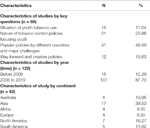
Tabular array 1 Full general characteristics of included studies based on cardinal questions, time interval, and region.
Analysis on Risk of Bias
Chance of bias assay is not perfectly attractive with our study. We did non analyze the attrition bias considering our study is a comparison of interventional studies and attrition bias occurs for randomized control trials. Moreover, we had very low influence of selection bias considering all the interventions in this study were based on WHO MPOWER strategies. Studies by country and continent are not in equal proportion. Nosotros plant that there were few studies in Africa, and more studies were available for Asia, simply the creative policies nosotros presented have no geographical boundaries. The number of studies for Asian countries is more than that from other continents considering Asia has more ii/3 of the world population and in that location are a higher number of countries compared to other continents. Nigh importantly, we focused on the policies related to youth and policies applicable to all age groups; gender and location were non prioritized. Nosotros applied well-nigh all national representative survey results and global studies. There were no significant bug on data collection from the aspect on gamble of bias.
Synthesis of Result
Nosotros synthesized the results via a descriptive approach in three perspectives. The first i is youth-targeted current pattern of tobacco control policies and their touch on. We have divided the policy pattern into 2 categories: i) protect the youth form tobacco use and 2) assist the youth quit tobacco use. Likewise, nosotros compared the effectiveness and challenges of tobacco command in different countries. Other important aspects are global challenges and ways on controlling tobacco use among youth.
Patterns of Youth Tobacco Control Policies
Over the past two decades, a number of tobacco control policies take been implemented to preclude smoking initiation and encourage cessation among adolescents. To expand the fight against the tobacco epidemic, WHO introduced MPOWER, an initiative that includes six strategies: monitor tobacco use and prevention policies; protect people from tobacco fume; offer help to people who want to quit using tobacco; warn almost the dangers of tobacco; enforce bans on tobacco ad, promotion, and sponsorship; and enhance taxes on tobacco (World Health Organization, 2008). The effectiveness of MPOWER on youth is distinct. The International Agency for Research on Cancer (IARC) institute that afterward increasing the tax and toll of tobacco, there was significant reduction in tobacco use because youth are price sensitive and take a express amount of resource (World Wellness Organisation, 2011). Similarly, the fume-free air constabulary has a protective effect on immature people and reduced smoking prevalence among boys of high socioeconomic status (Tauras et al., 2013). Near youth are influenced by tobacco advertisements, and according to the WHO, 24 countries have implemented a complete ban on straight and indirect tobacco advertizement, promotion and sponsorship (TAPS) (Earth Health Organization, 2013). A written report in 19 developing countries showed that there was a positive correlation betwixt smoking and exposure to advert (Kostova and Blecher, 2013). There were no appropriate research examining the effectiveness of offering to quit tobacco/smoking and warning of the harmful effects of tobacco applicative for youth. Therefore, in high-, (Dupont and Ward, 2002) low-, and middle-income countries, (Joseph, 2010) raising the toll of tobacco and the tax on tobacco is more effective in reducing youth tobacco apply than other strategies. The Usa Centers for Disease Command and Prevention (CDC) identified seven bones principles for tobacco control; three of these policies are relevant to youth: reducing tobacco use amidst adolescents; reducing the initiation of tobacco utilize amid children, adolescents, and young adults; and increasing smoking cessation attempts among boyish smokers (Centers for Disease Control Prevention (CDC)., 2007). A tobacco control programme in the United Kingdom has implemented three strategies to protect youth from tobacco use: reducing tobacco consumption, supporting parents and youths, and reinforcing the benefits of clean air spaces (National Health Service., 2015). Policy researchers have classified tobacco control initiatives into ii groups: those intending to prevent first-fourth dimension tobacco users (adolescents) and those aiming for cessation of tobacco utilise amidst current users, including both occasional and frequent users. These initiatives are based on multipronged approach, described below.
Disconnect Youth From Tobacco and Use Advert Campaigns and Laws to Demotivate Youth From Tobacco Consumption
Popular policies within this guideline include cigarette tax increases, smoke-free air laws, and youth access laws (laws on sales to minors and laws against youth possession, apply, and buy)(Warner et al., 2003). Ross and Chaloupka highlighted that in the United States, higher cigarette prices reduced the probability of youth smoking, and the teen-specific perceived price of cigarettes had a negative event on demand (Ross and Chaloupka, 2003). Like findings have been reported by other researchers, and some accept constitute that increased toll decreased current smoking prevalence and the number of cigarettes smoked per day among youth and young developed smokers (Wasserman et al., 1991; Tauras, 2004; Levy et al., 2004). Other approaches to discourage adolescent smoking are restrictions on smoking at home, more extensive bans on smoking in public places, and enforced bans on smoking at school (Wakefield et al., 2000; Farkas et al., 2000). Sales to minors (STM) laws, which penalize merchants and retailers for selling tobacco to youth, and possession, use, and purchase laws, which punish youth themselves for possessing, using, or purchasing tobacco products, accept also been practical (Rabin and Sugarman, 2001). Some studies accept revealed an association betwixt youth access and STM laws, but a sustained relationship betwixt those laws and decreased youth smoking prevalence has been questioned. A report from Bangladesh shows that youth are more vulnerable due to a tobacco-friendly environment in school (Kabir et al., 2013). When the cost increase policy was endorsed in the United States, information technology had a mixed affect, but a systematic review revealed no meaning change in youth smoking. This law was also controversial, and cases were brought to court (Jason et al., 2005). Raising taxes on tobacco and STM laws have thus shown mixed effects, along with legal restrictions on adolescent smoking in the Usa.
Increasing Smoking Cessation
Tobacco abeyance, specially smoking cessation, depends on patterns of smoking such as historic period, peer pressure, influences of electronic media, and effective counseling to users. Among youth, quitting smoking has had no special program, and only 2–8% of youth smokers take attempted to quit in the Grimshaw et al., 2003 study. Hodder et al. suggested that universal school-based interventions could be an constructive manner to go youth to quit using tobacco and alcohol (Hodder et al., 2014).
In family unit and school, both approaches tin be as useful because some family unit members, teachers, and seniors need to quit smoking and pupils at risk must exist disconnected from the first puff of smoking. Preventing youth from starting tobacco employ is more than effective and costs less than helping users quit, but no proper comparative studies accept examined the unlike patterns and effects of youth tobacco control policies.
Major National Tobacco Control Policies Intervention, Outcomes, and Challenges
Table two shows the national tobacco control policies targeting youth. In 26 studies, researchers explored the overview and impact of youth-related tobacco control policies from People's republic of china, Republic of india, Nepal, Thailand, Japan, South Korea, Namibia, Chad, Seychelles, Mauritius, Niger, Eritrea, Madagascar, Due south Africa, North Africa, France, Britain, Commonwealth of australia, Uruguay, Panama, Colombia, Guatemala, Brazil, United States, and Canada. Likewise, in 15 studies, the challenges to control tobacco use in those countries were investigated. Seven studies were used as representative of global situations and challenges.

Table ii National tobacco policies and challenges to control.
The direction of current policies has shifted significantly after WHO FCTC in tobacco command motility. The average strength of policies adopted varies significantly by country efforts. Cultural diversity leads to different pros and cons of tobacco control initiatives to whatever age, gender, geography, etc., and these subtleties must be taken into business relationship when forming policies, and the FCTC was implemented on a national and local level.
A report of the US Surgeon Full general in 2012 showed that the global youth tobacco use rate was decreasing satisfactorily; the rate was 28% in 2000 and had declined to 8% by 2013 (Health UDo, Services H., 2012), but that survey did non lucifer the GYTS of 2011. WHO FCTC has a comprehensive and global impact, specific to reducing the brunt of youth tobacco use, but countries are reluctant to have proactive roles and set specific strategies due to lack of strong monitoring past WHO (Warner and Tam, 2012). Even so, taxation, clean indoor air policies, and alert labels are ranked as the highest priorities only are general approaches, and there is still a demand for more specific guidelines, integrated approaches, and age-specific tobacco control initiatives.
Tobacco companies around the world are focusing on strategic plans to cake the implementation of Article 11 of the WHO FCTC, which sets guidelines on packaging and labeling of tobacco products (Sebrié et al., 2010) considering youth are their target group as after they take go addicted, youth become regular customers. Tobacco companies have the ability and money to influence legislators (Patel et al., 2007) and challenge the government'southward legislative powers through litigation (Holden and Lee, 2009). The British American Tobacco (BAT) visitor's former quality controller appealed against the ban on public smoking in Uganda; however, it was not successful. The tobacco industry in Kenya went to court to challenge the Tobacco Control Human activity of 2007, which created challenges for public smoking ban in public places (Tumwine, 2011). Similar cases have also been seen in the Us high courts without decisions, representing a challenge to implement the WHO FCTC. Tobacco companies accept litigated confronting new cigarette labeling policies in Uruguay, Brazil, and Paraguay to stop or filibuster the implementation of pictorial warnings (Sebrié et al., 2010) Thus, tobacco control stakeholders and tobacco production, manufacturing, and distribution companies need to proceed to fight. It shows that tobacco companies may exist a negative influence on youth-friendly tobacco control policies in the future.
Discussion
The WHO FCTC sought to substantially reduce and sustain reductions in indoor smoking and had high levels of public support and a strong public commitment with close monitoring in French republic, (Fong et al., 2013) China, (Levy et al., 2014) the The states and Canada, (House of Representative, U.s.a.., 2009; Levy et al., 2011; Hitchman et al., 2013) South Africa, (Reddy et al., 2013) South Korea, (Levy et al., 2010) and Brazil (Levy et al., 2012) (Table 1). The pop policies were taxation increment, restriction on advertising, and smoking ban in public places, but the virtually effective policy is raising the tax on tobacco products (Health NCfCDPaHPUOoSa., 2012) Abuse of youth to promote smoking by companies and smuggling are major challenges, particularly in Africa and South America. The to a higher place policies showed that difficult policies (legal provision) could exist more effective and long lasting. Some creative soft policies (program and interventions) were as well equally effective only policies related to tobacco cessation are not enough. Primarily, strong monitoring and creative preventive policies led to satisfactory reduction on prevalence on youth tobacco apply.
In our study, we explored the need to formulate tobacco control policies by historic period groups, and the vulnerable age group is the youth; there is a need for a preventive way that is cost-effective and a lesser burden to the disease both clinically and economically. There are some similar conclusions in our studies. Saleheen et al. suggested that there is need for targeted policies for youth and brunt of diseases produced by tobacco (Saleheen et al., 2014). Another systematic review by Jawad with 36 studies from 15 countries yielding 125 elasticity estimates found that a 10% price increment would reduce demand by 8.3% for cigars, 6.4% for curlicue your owns, 5.7% for bidis, and 2.1% for smokeless tobacco (Jawad et al., 2018), generally to youth (Levy et al., 2018). Some other systematic review from 16 studies past Duncan constitute that a tobacco control arroyo in health care settings is more effective than in schoolhouse and at home (Duncan et al., 2018). A policy review past Glantz concluded that e-cigarettes are replacing conventional cigarettes, only information technology is not a good approach to reducing nicotine dependency (Glantz and Bareham, 2018). Now, the JUUL lab's mission is to eliminate cigarettes, but it does not relieve nicotine dependency as it only replaces traditional tobaccos; the challenge for JUUL is to eliminate nicotine dependency in the futurity. The tobacco command project period is besides a significant gene because comprehensive tobacco command programs lead to an 8% brusque-term relative reduction, increasing to a 12% long-term relative reduction in smoking prevalence through the greater impact on youth smoking (Levy et al., 2018).
Mode Forward
We discussed the situation of youth tobacco use, its effectiveness, and major challenges. Now, there is the question of the way forward. UN sustainable development goal 3a indicates strengthening the implementation of the WHO Framework Convention on Tobacco Control in all countries, every bit appropriate. Multiple impacts of tobacco control focusing on youth direct reduce adult and premature mortality rate (Ranabhat et al., 2017). Thus, there is a need for specific policies past age because growth and development, psychology, social environment, responsibilities, and pathophysiology are not similar for all ages. In this line, there should be unlike policies, programs, interventions, and remedies. Similarly, the priority of tobacco control should be different because intervention for youth and the elderly does not provide similar outcomes. Other public health projects like maternal health, child reproductive wellness, disease control, etc., are a affair of resource allocation, and nosotros expect measurable outcomes in each micro activity. In that location is no debate that tobacco prevention for youth ensures low toll and higher output. The funding organizations for tobacco control have not encouraged or disappointed because such organizations have not provided significant outcomes. If we distinguish by age, specific tobacco control, and prevention program, funding projects may revisit their policies and invest more on youth due to their economical productive life. It is possible because youth have short exposure to tobacco addiction, can make potent commitments to quit tobacco, are like shooting fish in a barrel to motivate to quit tobacco, and accept family and social pressure in comparison with adults and the elderly. A similar analysis can be found in The Land of Youth Tobacco Prevention and Control Spending in Alabama: Struggles, Consequences, and Solutions report 2014 (Dunlap and McCallum, 2014).
The boilerplate strength of policies varied significantly by country. The success of tobacco control initiatives was significantly associated with the number and types of policy adopted (Wipfli and Huang, 2011). In European countries, limiting youth exposure to smoking in movies might be an effective way to foreclose adolescent smoking onset (Morgenstern et al., 2013). In addition, a family smoking prevention law in the U.s. has reduced the prevalence of youth smoking (Ribisl, 2012). Recently, Nepal drafted a clear provision that people who employ tobacco (including smokeless tobacco) volition non be eligible as authorities employees; this policy is appealing considering information technology directly affects unemployed youth (Sinha et al., 2012). Peer-based approach projects are best models in youth tobacco control in Australia. Youth are active users of social media such as Facebook, Twitter, YouTube, Messenger, and other apps. Creative mobilization of information technology could exist useful for implementation and monitoring of youth tobacco use (Freeman, 2012). Social drama, documentary, family unit movies, cartoons about tobacco apply bear on on youth from elementary schoolhouse could also discourage youth from using tobacco (Merchant, 2013). Hence, advisable use of mass media and social network is more than effective. The e-cigarette is another pick for tobacco control, just regulatory problems surrounding audit of electronic cigarettes is unknown (Jovanovic and Jakovljevic, 2015). A systematic review past Park et al. concluded that the employ of multimedia, tailored approaches, personalized feedback, and interactive feature programs could positively impact tobacco prevention and cessation (Park and Drake, 2015). Likewise, receptivity to tobacco advertizement was significantly associated with progression toward use in adolescents (Pierce et al., 2018).
Strengths and Limitations
This article describes tobacco control policies with a focus on the younger generation. This is an issue that is pregnant but often neglected. This article is intended for a wide range of readers (basic readers to policy makers, policy researchers, and other stakeholders related to tobacco control). However, this paper also has some limitations. We used the term youth as used by different authors in their articles and context than any fixed historic period. Here, we have used terms such equally boys, girls, adolescents, elder children, and teenagers synonymously with youth. Tobacco utilise is focused mostly on smoking, though smokeless tobacco is besides a major trouble that the earth also needs to face. Existence a comprehensive review, all components of systematic review and meta-assay are not applicable to use.
Conclusion
Nigh 1/5 of youth used tobacco globally and it has multiple impacts on wellness economic system and family integrity. The prevalence of tobacco use is decreasing but not at a satisfactory rate. The policies of tobacco control adopted by many countries are based on the WHO Framework Convention on Tobacco Command but have non necessarily focused on youth. Due to the physical and economic burden of tobacco consumption by youth, this is a high priority that needs to be addressed. In this digital age, creative tobacco control policies focusing on youth must be applied. Successful policies of tobacco control for youth that need to exist replicated past context, country, region, and gender can be recommended. Tobacco control should exist a social, public health, and quality-of-life business concern rather than a business organization and trade issue.
Author Contributions
CR prepared the inquiry concept and framework, nerveless the articles, prepared the manuscript, and overall pursued the article. C-BK verified the concept, verified the reference, and reviewed the manuscript. MBP verified all references and prepared the composition of contents. MJ reviewed the manuscript and rearranged some parts.
Funding
This study was supported by a National Research Foundation Grant of Korea, Korean Government (NRF-2016S1A5B892520) and the Korean Medical Clan (RIHP-2015-02).
Conflict of Involvement Argument
The authors declare that the research was conducted in the absence of whatsoever commercial or financial relationships that could be construed every bit a potential conflict of involvement.
Abbreviations
CDC, Centers for Disease Control and Prevention; FCTC, Framework Convention on Tobacco Control; GYTS, Global Youth Tobacco Survey; NRF, National Research Foundation; STM, Sales to minor; WHO, Globe Health Organization; IARC, International Agency for Inquiry on Cancer; BAT, British American Tobacco.
Acknowledgments
We sincerely acknowledge Prof. Indeok Kong, Dr. Shambu Prasad Acharaya (WHO), Dr. Nabin Baral and Arthur Atkinson for their quick review and Margaret Storey for English language improvement.
References
Agaku, I., Rex, B., Dube, S. R., Office on Smoking and Wellness, National Center for Chronic Disease Prevention and Health Promotion, CDC. (2013). Current cigarette smoking amid adults—United States, 2011. JAMA. 309(half dozen):539–541. doi 10.1001/jama.201.114523
CrossRef Total Text | Google Scholar
Ajzen, I., Fishbein, Yard. (1970). The prediction of behavior from attitudinal and normative variables. J. Exp. Soc. Psychol. 6 (4), 466–487. doi: 10.1016/0022-1031(70)90057-0
CrossRef Full Text | Google Scholar
Alexander, C., Piazza, M., Mekos, D., Valente, T. (2001). Peers, schools, and boyish cigarette smoking. J. Adolesc. Health 29 (i), 22–thirty. doi: 10.1016/S1054-139X(01)00210-5
PubMed Abstract | CrossRef Total Text | Google Scholar
Al-Sadat, Northward., Misau, A., Zarihah, Z., Maznah, D., Su, T. T. (2010). Adolescent tobacco use and health in South E Asia. Asia-Pac. J. Public Health 22 (three suppl), 175S–180S. doi: 10.1177/1010539510372835
PubMed Abstract | CrossRef Full Text | Google Scholar
Arrazola, R. A., Neff, L. J., Kennedy, Southward. One thousand., Holder-Hayes, East., Jones, C. D., Centers for Illness and Command Prevention (CDC). (2014). Tobacco use among centre and high schoolhouse students—United States, 2013. MMWR Morb. Mortal. Wkly. Rep. 63 (45), 1021–1026.
PubMed Abstract | Google Scholar
Asamura, H., Chansky, K., Crowley, J., Goldstraw, P., Rusch, V. W., Vansteenkiste, J. F., et al. (2015). The International Association for the Study of Lung Cancer Staging Project: proposals for the revision of the North descriptors in the forthcoming 8th edition of the TNM classification for lung cancer. J. Thorac. Oncol. 10 (12), 1675–1684. doi: ten.1097/JTO.0000000000000678
PubMed Abstract | CrossRef Full Text | Google Scholar
Bandura, A. (1976). Social learning theory. Stanford Academy. New York, U.s.a.: General Learning Press.
Google Scholar
Blum, L. A. (2009). Friendship, altruism and morality (Routledge Revivals). New York, USA: Routledge (Taylor & Francis Group). doi: 10.4324/9780203857304
CrossRef Full Text | Google Scholar
Cancer Council. (2017a). Approaches to youth smoking prevention.
Google Scholar
Carpenter, C., Cook, P. J. (2008). Cigarette taxes and youth smoking: new bear witness from national, state, and local youth hazard behavior surveys. J. Wellness Econ. 27 (2), 287–299. doi: 10.1016/j.jhealeco.2007.05.008
PubMed Abstract | CrossRef Full Text | Google Scholar
Centers for Disease Control and Prevention., Cigarette smoking among adults and trends in smoking abeyance—United States 2012. (2000).
Google Scholar
Centers for Disease Command Prevention (CDC) (2007). Best practices for comprehensive tobacco control programs 2007. Atlanta: U.S. Department of Wellness and Human Services, National Center for Chronic Disease Prevention and Wellness Promotion, Office on Smoking and Health.
Google Scholar
Chaloupka, F. J., Straif, Yard., Leon, 1000. E. (2011). Effectiveness of tax and toll policies in tobacco command. Trop. Biomed. 20 (three), 235–238. doi: x.1136/tc.2010.039982
CrossRef Full Text | Google Scholar
Do, Y. Thousand., Farooqui, Thousand. A. (2012). Differential subjective responsiveness to a future cigarette price increment amid South Korean youth smokers. Nicotine Tob. Res. 14 (2), 209–216. doi: 10.1093/ntr/ntr187
PubMed Abstract | CrossRef Total Text | Google Scholar
Doku, D. (2010). The tobacco industry tactics—a challenge for tobacco control in low and heart income countries. Afr. Health Sci. x (2), 201–203.
PubMed Abstract | Google Scholar
Duncan, L. R., Pearson, E. South., Maddison, R. (2018). Smoking prevention in children and adolescents: a systematic review of individualized interventions. Patient Educ. Couns. 101 (3), 375–388. doi: 10.1016/j.pec.2017.09.011
PubMed Abstruse | CrossRef Full Text | Google Scholar
Dunlap, S. T., McCallum, D. Thou. (2014). The state of youth tobacco prevention and control spending in Alabama: struggles, consequences, and solutions. Alabama: The Institute for Social Science Enquiry, University of Alabama.
Google Scholar
Dupont, D., Ward, A. J. (2002). The economic impacts of cigarette tax reductions on youth smoking in Canada. Ste-Catherines: Brock University.
Google Scholar
Durkin, South., Brennan, E., Wakefield, Yard. (2012). Mass media campaigns to promote smoking abeyance amid adults: an integrative review. Trop. Biomed. 21 (two), 127–138. doi: 10.1136/tobaccocontrol-2011-050345
CrossRef Total Text | Google Scholar
Eriksen, Chiliad., Mackay, J., Schluger, North. (2015). The tobacco atlas. Fifth Atlanta: The American Cancer Society.
Google Scholar
Farkas, A. J., Gilpin, Eastward. A., White, M. M., Pierce, J. P. (2000). Association between household and workplace smoking restrictions and boyish smoking. J. Am. Med. Assoc. 284 (6), 717–722. doi: 10.1001/jama.284.6.717
CrossRef Full Text | Google Scholar
Fong, Yard. T., Craig, 50. V., Guignard, R., Nagelhout, G. East., Tait, M. K., Driezen, P., et al. (2013). Evaluating the effectiveness of France's indoor smoke-free law 1 yr and five years later on implementation: findings from the ITC France survey. PloS One 8 (6), e66692. doi: 10.1371/periodical.pone.0066692
PubMed Abstract | CrossRef Total Text | Google Scholar
Glantz, S. A., Bareham, D. West. (2018). E-cigarettes: Use, effects on smoking, risks, and policy implications. Annu. Rev. Public Health 39, 215–235. doi: 10.1146/annurev-publhealth-040617-013757
PubMed Abstract | CrossRef Full Text | Google Scholar
Griffith, 1000., Cardone, A., Jo, C., Valdemoro, A., Sebrié, E. (2010). Implementation of smokefree workplaces: challenges in Latin America. SciElo Public Wellness 52, S347–S354. doi: 10.1590/S0036-36342010000800033
CrossRef Total Text | Google Scholar
Grimsaw, G., Stanton, A. (2017). Tobacco abeyance interventions for young people.
Google Scholar
Grimshaw, M., Stanton, A., Blackburn, C., Andrews, K., Grimshaw, C., Vinogradova, Y., et al. (2003). Patterns of smoking, quit attempts and services for a accomplice of 15-to nineteen-year-olds. Child Care Wellness Dev. 29 (six), 457–464. doi: x.1046/j.1365-2214.2003.00365.x
PubMed Abstruse | CrossRef Full Text | Google Scholar
Hawkins, South. S., Bach, Due north., Baum, C. F. (2018). Impact of tobacco command policies on adolescent smokeless tobacco and cigar employ: a departure-in-differences approach. BMC Public Health 18 (1), 154. doi: 10.1186/s12889-018-5063-z
PubMed Abstract | CrossRef Total Text | Google Scholar
Health NCfCDPaHPUOoSa. (2012). Preventing tobacco use among youth and young adults. Atalanta, U.s.a..
Google Scholar
Health UDo, Services H. (2012). Preventing tobacco use among young people: a written report of the Surgeon Full general. Atlanta, GA: US Department of Wellness and Homo Services, Public Health Service, Centers for Affliction Command and Prevention, National Centre for Chronic Disease Prevention and Health Promotion, Function on Smoking and Health.
Google Scholar
Hefler, M., Chapman, Due south. (2014). Disadvantaged youth and smoking in mature tobacco control contexts: a systematic review and synthesis of qualitative research. Trop. Biomed. five (17), 56. doi: x.1136/tobaccocontrol-2014-051756
CrossRef Full Text | Google Scholar
Higgins, J., Green, S. (2011). Cochrane handbook for systematic reviews of interventions version 5.1. 0. London, United kingdom of great britain and northern ireland: the cochrane collaboration.
Google Scholar
Hitchman, S. C., Driezen, P., Logel, C., Hammond, D., Fong, One thousand. T. (2013). Changes in effectiveness of cigarette health warnings over time in Canada and the United states, 2002–2011. Nicotine Tob. Res. xvi (5), 536–543. doi: 10.1093/ntr/ntt196
PubMed Abstruse | CrossRef Total Text | Google Scholar
Hodder, R. Grand., Freund, M., Wolfenden, L., Bowman, J., Gillham, K., Dray, J., et al. (2014). Systematic review of universal school-based resilience interventions targeting adolescent tobacco, alcohol or illicit drug use: review protocol. BMJ Open iv (5), e004718. doi: x.1136/bmjopen-2013-004718
PubMed Abstract | CrossRef Full Text | Google Scholar
Holden, C., Lee, K. (2009). Corporate ability and social policy the political economic system of the transnational tobacco companies. Glob. Soc. Policy ix (iii), 328–354. doi: x.1177/1468018109343638
PubMed Abstract | CrossRef Full Text | Google Scholar
Horta, B. Fifty., Calheiros, P., Pinheiro, R. T., Tomasi, E., Amaral, G. D. (2001). Tobacco smoking among teenagers in an urban area in Southern Brazil. Rev. Saúde. Pública. 35 (2), 159–164. doi: 10.1590/S0034-89102001000200009
PubMed Abstruse | CrossRef Full Text | Google Scholar
Firm of Representative, Usa. (2009). A family smoking prevention and tobacco control act. In: Public Police force.
Google Scholar
Hu, T. Westward., Lee, A. H., Mao, Z. (2013). WHO Framework Convention on Tobacco Control in Mainland china: barriers, challenges and recommendations. Glob. Health Promot. xx (four), 13–22. doi: x.1177/1757975913501910
CrossRef Full Text | Google Scholar
Islami, F., Stoklosa, K., Drope, J., Jemal, A. (2015). Global and regional patterns of tobacco smoking and tobacco control policies. Eur. Urol. Focus 1 (1), 3–16. doi: 10.1016/j.euf.2014.10.001
PubMed Abstract | CrossRef Total Text | Google Scholar
Jason, L. A., Pokorny, S. B., Muldowney, K., Velez, Chiliad. (2005). Youth tobacco sales-to-minors and possession-utilise-purchase laws: a public health controversy. J. Drug Educ. 35 (4), 275–290. doi: 10.2190/1F1R-KGTL-PVDE-V9EJ
PubMed Abstract | CrossRef Full Text | Google Scholar
Jawad, 1000., Lee, J. T., Glantz, S., Millett, C. (2018). Price elasticity of demand of non-cigarette tobacco products: a systematic review and meta-assay. Tob. Control 27 (6), 689–695. doi: ten.1136/tobaccocontrol-2017-054056
PubMed Abstract | CrossRef Full Text | Google Scholar
Jessor, R., Jessor, S. L. (1977). Problem behavior and psychosocial development: a longitudinal written report of youth. New York, USA: Academic Press.
Google Scholar
Joseph, R. A. (2010). The economics of youth tobacco utilise in India. Chicago: University of Illinois.
Google Scholar
Kabir, Thou., Goh, One thousand.-Fifty., Khan, Thousand. (2013). Adolescent tobacco use and its determinants prove from Global Youth Tobacco Survey. Asia-Pac. J. Public Health 27 (two), 1579–1589. doi: 10.1177/1010539512472357
CrossRef Full Text | Google Scholar
Katanoda, K., Jiang, Y., Park, South., Lim, Yard. K., Qiao, Y. L., Inoue, Thou. (2014). Tobacco control challenges in East Asia: proposals for change in the world's largest epidemic region. Tob. Control 23 (four), 359–368. doi: 10.1136/tobaccocontrol-2012-050852
PubMed Abstract | CrossRef Full Text | Google Scholar
Khuder, S. A., Price, J. H., Hashemite kingdom of jordan, T., Khuder, Southward. S., Silvestri, Thou. (2008). Cigarette smoking amongst adolescents in Northwest Ohio: correlates of prevalence and age at onset. Int. J. Environ. Res. Public Health 5 (4), 278–289. doi: 10.3390/ijerph5040278
PubMed Abstract | CrossRef Full Text | Google Scholar
Kim, J. A., Lee, C. Y., Lim, E. South., Kim, One thousand. South. (2013). Smoking cessation and characteristics of success and failure among female loftier-school smokers. Jpn. J. Nurs. Sci. 10 (one), 68–78. doi: x.1111/j.1742-7924.2012.00212.x
PubMed Abstruse | CrossRef Full Text | Google Scholar
Kostova, D., Blecher, E. (2013). Does ad matter? Estimating the impact of cigarette advertising on smoking amid youth in developing countries. Contemp. Econ. Policy 31 (3), 537–548. doi: x.1111/j.1465-7287.2012.00323.ten
CrossRef Full Text | Google Scholar
Levy, D. T., Chaloupka, F., Gitchell, J. (2004). The furnishings of tobacco control policies on smoking rates: a tobacco control scorecard. J. Public Wellness Manage. Pract. 10 (four), 338–353. doi: 10.1097/00124784-200407000-00011
CrossRef Full Text | Google Scholar
Levy, D. T., Cho, Southward. I., Kim, Y. Grand., Park, S., Suh, One thousand. Yard., Kam, South. (2010). SimSmoke model evaluation of the effect of tobacco control policies in Korea: the unknown success story. Am. J. Public Health 100 (7), 1267–1273. doi: 10.2105/AJPH.2009.166900
PubMed Abstruse | CrossRef Total Text | Google Scholar
Levy, D. T., Pearson, J. Fifty., Villanti, A. C., Blackman, K., Vallone, D.M., Niaura, R. S., et al. (2011). Modeling the hereafter effects of a menthol ban on smoking prevalence and smoking-attributable deaths in the U.s.a.. Am. J. Public Health 101 (vii), 1236–1240. doi: x.2105/AJPH.2011.300179
PubMed Abstract | CrossRef Full Text | Google Scholar
Levy, D., de Almeida, L. G., Szklo, A. (2012). The Brazil SimSmoke policy simulation model: the consequence of stiff tobacco control policies on smoking prevalence and smoking-owing deaths in a eye income nation. PLoS Med. nine (11), e1001336. doi: 10.1371/journal.pmed.1001336
PubMed Abstract | CrossRef Total Text | Google Scholar
Levy, D., Rodríguez-Buño, R. L., Hu, T. W., Moran, A. E. (2014). The potential effects of tobacco control in Communist china: projections from the China SimSmoke simulation model. Br. Med. J. 348 (10), g1134. doi: x.1136/bmj.g1134
CrossRef Full Text | Google Scholar
Levy, D. T., Tam, J., Kuo, C., Fong, G. T., Chaloupka, F. (2018). Research full report: the impact of implementing tobacco control policies: the 2017 tobacco command policy scorecard. J. Public Health Manage. Pract. 24 (five), 448. doi: 10.1097/PHH.0000000000000780
CrossRef Full Text | Google Scholar
Lim, K. H., Sumarni, Grand., Kee, C. C., Christopher, V. 1000., Noruiza Hana, Yard., Lim, K. K., et al. (2010). Prevalence and factors associated with smoking amidst form iv students in Petaling District, Selangor, Malaysia. Trop. Biomed. 27 (3), 394–403.
PubMed Abstract | Google Scholar
Lorant, Five., Soto, V. E., Alves, J., Federico, B., Kinnunen, J., Kuipers, Grand., et al. (2015). Smoking in school-aged adolescents: design of a social network survey in half-dozen European countries. BMC Res. Notes eight (1), 91. doi: 10.1186/s13104-015-1041-z
PubMed Abstract | CrossRef Full Text | Google Scholar
Maddox, R., Davey, R., Cochrane, T., Lovett, R., van der Sterren, A. (2013). Study protocol—Ethnic Australian social networks and the touch on smoking policy and programs in Australia: protocol for a mixed-method prospective report. BMC Public Health 13 (i), 879. doi: ten.1186/1471-2458-13-879
PubMed Abstract | CrossRef Full Text | Google Scholar
Madkour, A. Southward., Ledford, E. C., Andersen, 50., Johnson, C. C. (2013). Tobacco advertisement/promotions and adolescents' smoking risk in Northern Africa. Trop. Biomed. 23, 244–252. doi: 10.1136/tobaccocontrol-2012-050593
CrossRef Total Text | Google Scholar
Merchant, Z. F. (2013). A study on the depiction of drug usage, alcohol consumption and cigarette smoking in movies and its perceived effect on a young audience. A comparative written report of American and Indian cinema and their respective Audiences. South Florida: Section of Mass Communications University of Due south Florida.
Google Scholar
Ministry of Health and Population. (2013). National Tobacco Control Strategic Programme (2013–2016). Teku, Kathmandu, Nepal: National Wellness Pedagogy Information and Communication Center.
Google Scholar
Morgenstern, M., Sargent, J. D., Engels, R. C. Thou. Due east., Scholte, R. H. J., Florek, Eastward., Hunt, 1000., et al. (2013). Smoking in movies and boyish smoking initiation: Longitudinal study in six European countries. Am. J. Prev. Med. 44 (4), 339–344. doi: x.1016/j.amepre.2012.11.037
PubMed Abstract | CrossRef Full Text | Google Scholar
Muller, F., Wehbe, Fifty. (2008). Smoking and smoking cessation in Latin America: a review of the current situation and available treatments. Int. J. Chron. Obstruct. Pulmon. Dis. 3 (2), 285. doi: 10.2147/COPD.S2654
PubMed Abstract | CrossRef Full Text | Google Scholar
Müller, F., Wehbe, L. (2008). Smoking and smoking abeyance in Latin America: a review of the current situation and available treatments. Int. J.COPD iii (2), 285–293. doi: 10.2147/COPD.S2654
CrossRef Total Text | Google Scholar
Nelson, D. Due east., Mowery, P., Asman, K., Pederson, Fifty. L., O'Malley, P. Chiliad., Malarcher, A., et al. (2008). Long-term trends in adolescent and immature adult smoking in the U.s.: metapatterns and implications. Am. J. Public Health 98 (5), 905–915. doi: 10.2105/AJPH.2007.115931
PubMed Abstract | CrossRef Total Text | Google Scholar
Ng, M., Freeman, 1000. One thousand., Fleming, T. D., Robinson, M., Dwyer-Lindgren, L., Thomson, B., et al. (2014). Smoking prevalence and cigarette consumption in 187 countries, 1980–2012. J. Am. Med. Assoc. 311 (2), 183–192. doi: 10.1001/jama.2013.284692
CrossRef Total Text | Google Scholar
System WH. (2011). WHO Report on The Global Tobacco Epidemic: Global youth tobacco survey data 2011. Geneva: World Health System.
Google Scholar
Organisation WH. (2011). Effectiveness of tax and price policies for tobacco control.
Google Scholar
Organization WH. (2013). WHO study on the global tobacco epidemic, 2013: Enforcing bans on tobacco advertising, promotion and sponsorship. World Wellness Organization.
Google Scholar
Organisation WH. (2017). WHO study on the global tobacco epidemic, 2017: Monitoring tobacco use and prevention policies. World Health Organization.
Google Scholar
Oswal, K. C. (2015). Factors associated with tobacco use amid adolescents in Bharat results from the Global Youth Tobacco Survey, Republic of india. Asia-Pac. J. Public Wellness 27 (ii), NP203–NP211. doi: 10.1177/1010539511436322
PubMed Abstract | CrossRef Total Text | Google Scholar
Patel, P., Collin, J., Gilmore, A. B. (2007). The constabulary was actually drafted by us but the Authorities is to exist congratulated on its wise actions: British American Tobacco and public policy in Kenya. Trop. Biomed. 16 (1), e1–e1. doi: 10.1136/tc.2006.016071
CrossRef Full Text | Google Scholar
Pierce, J. P., Sargent, J. D., Portnoy, D. B., White, M., Noble, M., Kealey, S., et al. (2018). Association between receptivity to tobacco advertising and progression to tobacco utilize in youth and young adults in the PATH Report. JAMA Pediat. 172 (v), 444–451. doi: x.1001/jamapediatrics.2017.5756
CrossRef Total Text | Google Scholar
Pradhan, P. M. S., Niraula, S. R., Ghimire, A., Singh, S. B., Pokharel, P. K. (2013). Tobacco use and associated factors among adolescent students in Dharan, Eastern Nepal: a cross-sectional questionnaire survey. BMJ Open iii (2), e002123. doi: 10.1136/bmjopen-2012-002123
PubMed Abstract | CrossRef Full Text | Google Scholar
Rabin, R. Fifty., Sugarman, S. D. (2001). Regulating tobacco. New York: Oxford University Press.
Google Scholar
Ranabhat, C. L., Kim, C. B., Park, Thousand. B., Acharaya, S. (2017). Multiple disparities in developed mortality in relation to social and wellness intendance perspective: results from different data sources. Glob. Health xiii (1), 57. doi: ten.1186/s12992-017-0283-z
CrossRef Full Text | Google Scholar
Ranabhat, C. L., Atkinson, J., Park, K. B., Kim, C. B., Jakovljevic, M. (2018). The influence of universal wellness coverage on life expectancy at nascency (LEAB) and good for you life expectancy (Hale): a multi-country cantankerous-exclusive study. Front end. Pharmacol. ix, 960. doi: x.3389/fphar.2018.00960
PubMed Abstract | CrossRef Full Text | Google Scholar
Ranabhat, C. L., Park, Thou. B., Kim, C. B., Kim, C. Due south., Jeong, H. Due south., Koh, S. B., et al. (2018). Influence of key wellness related indicators on adult bloodshed: effect from United nations member countries. Iran. J. Public Health 47 (half-dozen), 794–802.
PubMed Abstract | Google Scholar
Ranabhat, C. L., Kim, C. B., Singh, A., Acharya, D., Pathak, K., Sharma, B., et al. (2019). Challenges and opportunities towards the road of universal health coverage (UHC) in Nepal: a systematic review. Curvation. Public Health 77 (1), 5. doi: 10.1186/s13690-019-0331-7
PubMed Abstruse | CrossRef Full Text | Google Scholar
Reddy, P., James, Due south., Sewpaul, R., Yach, D., Resnicow, Yard., Sifunda, S., et al. (2013). A decade of tobacco command: the S African case of politics, health policy, health promotion and behaviour change. Southward. Afr. Med. J. 103 (11), 835–840. doi: 10.7196/samj.6910
PubMed Abstract | CrossRef Total Text | Google Scholar
Ribisl, K. Thousand. (2012). Inquiry gaps related to tobacco production marketing and sales in the family smoking prevention and tobacco command act. Nicotine Tob. Res. 14 (i), 43–53. doi: 10.1093/ntr/ntr098
PubMed Abstract | CrossRef Full Text | Google Scholar
Rondeau, V., Allain, H., Bakchine, S., Bonet, P., Brudon, F., Chauplannaz, One thousand., et al. (2008). General exercise-based intervention for suspecting and detecting dementia in France: a cluster randomized controlled trial. Dementia vii (4), 433–450. doi: 10.1177/1471301208096628
CrossRef Full Text | Google Scholar
Rosenberg, M. (1979). Conceiving The Self. 1st ed, New York, United states: Basic Books.
Google Scholar
Ruiz, Thou. A., Rivera-Rodríguez, D. East., Marín, Y., González, J. C., Moreno, R. H. (2009). Tobacco control initiatives in Republic of colombia'south congress, 1992-2007. Rev. Panam. Salud Publica/Pan. Am. J. Public Wellness 25 (6), 471–480.
Google Scholar
Saleheen, D., Zhao, W., Rasheed, A. (2014). Epidemiology and public health policy of tobacco utilise and cardiovascular disorders in low- and center-income countries. Arterioscler. Thromb. Vasc. Biol. 34 (nine), 1811–1819. doi: 10.1161/ATVBAHA.114.303826
PubMed Abstruse | CrossRef Full Text | Google Scholar
Sebrié, E. M., Blanco, A., Glantz, S. A. (2010). Cigarette labeling policies in Latin America and the Caribbean: progress and obstacles. Salud Pública Méx. 52, S233–S243. doi: 10.1590/S0036-36342010000800019
PubMed Abstruse | CrossRef Total Text | Google Scholar
Simons-Morton, B., Crump, A. D., Haynie, D. L., Saylor, K. Eastward., Eitel, P., Yu, K. (1999). Psychosocial, school, and parent factors associated with contempo smoking among early on-adolescent boys and girls. Prev. Med. 28 (2), 138–148. doi: 10.1006/pmed.1998.0404
PubMed Abstract | CrossRef Full Text | Google Scholar
Sinha, D., Bajracharya, B., Khadka, B., Rinchen, S., Bhattad, V., Singh, P. (2012). Smokeless tobacco use in Nepal. Indian J. Cancer 49 (four), 352. doi: 10.4103/0019-509X.107728
PubMed Abstract | CrossRef Full Text | Google Scholar
Soule, E. Thou., Lipato, T., Eissenberg, T. (2015). Waterpipe tobacco-smoking: a new smoking epidemic among the young? Curr. Pulmonol. Rep. iv (iv), 163–172. doi: 10.1007/s13665-015-0124-half dozen
PubMed Abstract | CrossRef Full Text | Google Scholar
Stead, 50. F., Perera, R., Bullen, C., Mant, D., Lancaster, T. (2008). Nicotine replacement therapy for smoking abeyance. Cochrane Database Syst. Rev. 1 (1). CD000146. doi: 10.1002/14651858.CD000146.pub3
CrossRef Total Text | Google Scholar
Sullivan, D. H., Rees, 1000. A. (2014). Smoking bans in secure psychiatric hospitals and prisons. J. Law Med. 22 (ane), 22–30.
PubMed Abstract | Google Scholar
Tauras, J. A., Huang, J., Chaloupka, F. J. (2013). Differential impact of tobacco control policies on youth sub-populations. Int. J. Environ. Res. Public Health 10 (9), 4306–4322. doi: 10.3390/ijerph10094306
PubMed Abstract | CrossRef Total Text | Google Scholar
Thomas, D., Mackinnon, A. J., Bonevski, B., Abramson, M. J., Taylor, S., Poole, Due south. G., et al. (2016). Development and validation of a 21-item challenges to stopping smoking (CSS-21) calibration. BMJ Open vi (3), e011265. doi: 10.1136/bmjopen-2016-011265
PubMed Abstract | CrossRef Full Text | Google Scholar
Tumwine, J. (2011). Implementation of the framework convention on tobacco command in Africa: current status of legislation. Int. J. Environ. Res. Public Health 8 (xi), 4312–4331. doi: 10.3390/ijerph8114312
PubMed Abstract | CrossRef Full Text | Google Scholar
United states of america Congress Business firm of Represen. (2010). Family Smoking Prevention and Tobacco Control ACT. BiblioGov. Washington DC, USA.
Google Scholar
Vidhubala, Eastward., Sahaya, M., Vijayalakshmi, South., Bharathi, P., Quarishy, Z. B. (2014). Prevalence of tobacco apply amid school children, exposure to passive smoking and their knowledge level near tobacco control in Chennai urban center, Tamil Nadu-A School Based Survey. J. Indian Assoc. Child Adolesc. Ment. Wellness ten (ii), 110–131.
Google Scholar
Wakefield, Yard. A., Chaloupka, F. J., Kaufman, Northward. J., Orleans, C. T., Barker, D. C., Ruel, E. E. (2000). Effect of restrictions on smoking at home, at school, and in public places on teenage smoking: cross exclusive study. Br. Med. J. 321 (7257), 333–337. doi: 10.1136/bmj.321.7257.333
CrossRef Total Text | Google Scholar
Walker, S., Sanci, 50., Temple-Smith, M. (2013). Sexting: young women's and men's views on its nature and origins. J. Adolesc. Health 52 (6), 697-701. doi: 10.1016/j.jadohealth.2013.01.026
PubMed Abstract | CrossRef Total Text | Google Scholar
Warner, K. E., Tam, J. (2012). The bear on of tobacco control inquiry on policy: twenty years of progress. Trop. Biomed. 21 (2), 103–109. doi: 10.1136/tobaccocontrol-2011-050396
CrossRef Total Text | Google Scholar
Warner, K., Jacobson, P., Kaufman, N. (2003). Innovative approaches to youth tobacco command: introduction and overview. Trop. Biomed. 12 (suppl 1), i1–i5. doi: 10.1136/tc.12.suppl_1.i1
CrossRef Full Text | Google Scholar
Wasserman, J., Manning, Due west. G., Newhouse, J. P., Winkler, J. D. (1991). The furnishings of excise taxes and regulations on cigarette smoking. J. Health Econ. 10 (ane), 43–64. doi: ten.1016/0167-6296(91)90016-Thousand
PubMed Abstract | CrossRef Full Text | Google Scholar
Watanabe, I., Shigeta, 1000., Inoue, K., Matsui, D., Ozaki, E., Kuriyama, N., et al. (2013). Personal factors associated with smoking amidst marginalized and disadvantaged youth in Japan. A strong human relationship between smoking and convenience shop use. Int. J. Behav. Med. 20 (4), 504–513. doi: ten.1007/s12529-012-9268-8
PubMed Abstract | CrossRef Full Text | Google Scholar
White, V. M., Durkin, S. J., Coomber, Yard., Wakefield, G. A. (2013). What is the function of tobacco control advertising intensity and duration in reducing boyish smoking prevalence? Findings from xvi years of tobacco control mass media advertising in Australia. Trop. Biomed. 05 (09), 45. doi: 10.1136/tobaccocontrol-2012-050945
CrossRef Full Text | Google Scholar
Winickoff, J. P., McMillen, R. C., Vallone, D. M., Pearson, J. Fifty., Tanski, S.E., Dempsey, J. H., et al. (2011). United states of america attitudes most banning menthol in cigarettes: results from a nationally representative survey. Am. J. Public Health 101 (7), 1234–1236. doi: 10.2105/AJPH.2011.300146
PubMed Abstract | CrossRef Full Text | Google Scholar
Wipfli, H., Huang, G. (2011). Power of the process: Evaluating the bear on of the Framework Convention on Tobacco Command negotiations. Wellness Policy 100 (ii), 107–115. doi: ten.1016/j.healthpol.2010.08.014
PubMed Abstract | CrossRef Full Text | Google Scholar
Earth Health Organisation. (2008) WHO Report on the global tobacco epidemic, 2008: The MPOWER package. Geneva: Earth Wellness Organization.
Google Scholar
World Health System. (2011) WHO report on the global tobacco epidemic, 2011: warning about the dangers of tobacco. Geneva: World Health Organization.
Google Scholar
World Wellness Organization. (2011). WHO report on the global tobacco epidemic: Global youth tobacco survey data 2011. Geneva: Globe Wellness Organization.
Google Scholar
World Health Organization. (2011). Effectiveness of taxation and price policies for tobacco command. Geneva: Globe Wellness Organisation.
Google Scholar
World Health Arrangement. (2012). Global progress report on implementation of the WHO Framework Convention on Tobacco Command. Geneva: World Wellness Organisation.
Google Scholar
World Wellness Organisation. (2013). WHO study on the global tobacco epidemic, 2013: Enforcing bans on tobacco advertising, promotion and sponsorship. Geneva: World Health Organization.
Google Scholar
Earth Wellness Organization. (2017). WHO report on the global tobacco epidemic, 2017: Monitoring tobacco employ and prevention policies. Geneva: World Wellness System.
Google Scholar
Source: https://www.frontiersin.org/articles/10.3389/fphar.2019.00981/full
0 Response to "Social Policy Issue With Family Prevention and Tobacco Control"
Publicar un comentario